From the rainforests of West Africa comes one of nature's most extraordinary gifts — a small fruit whose protein is the world's most potent natural sweetener.
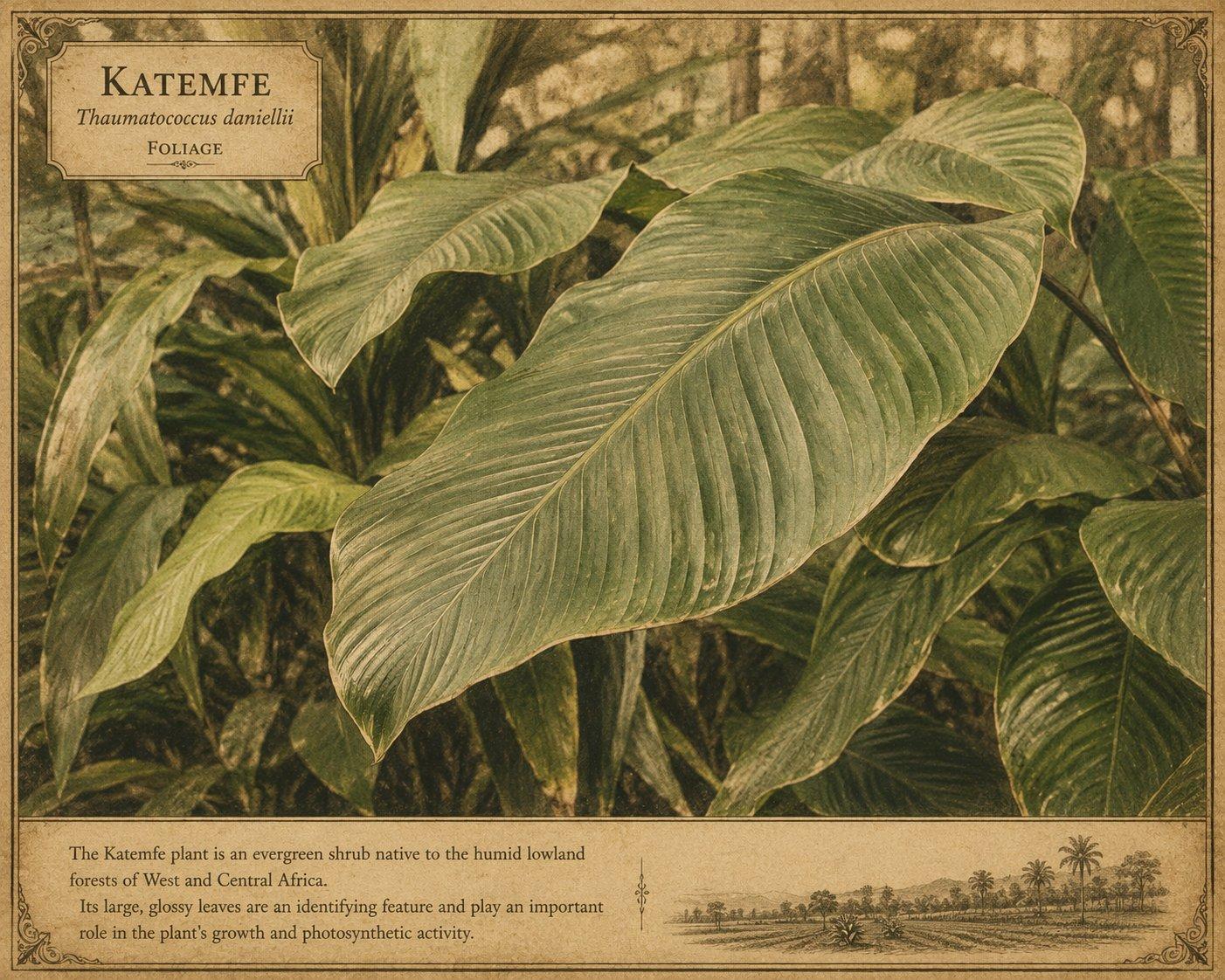
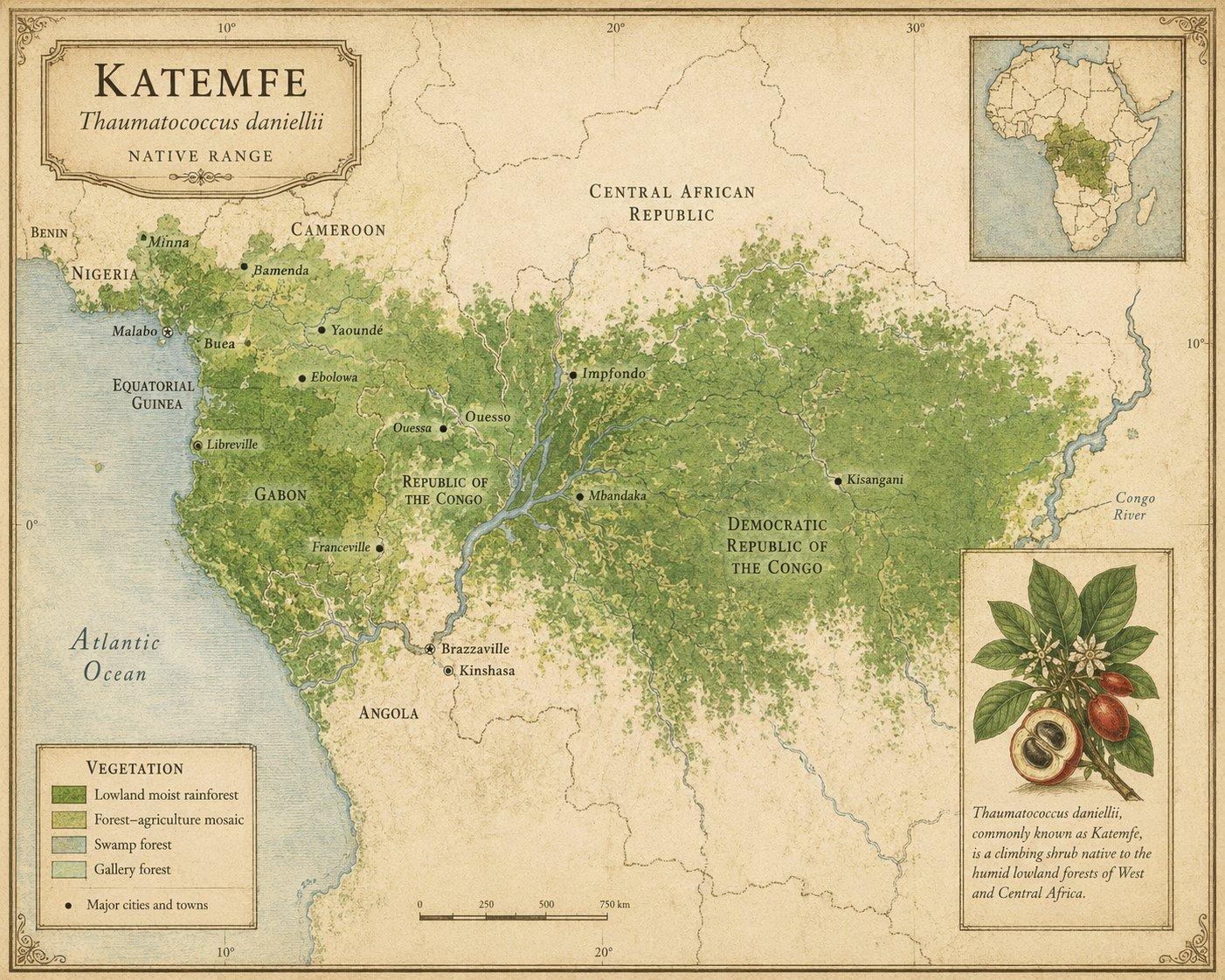
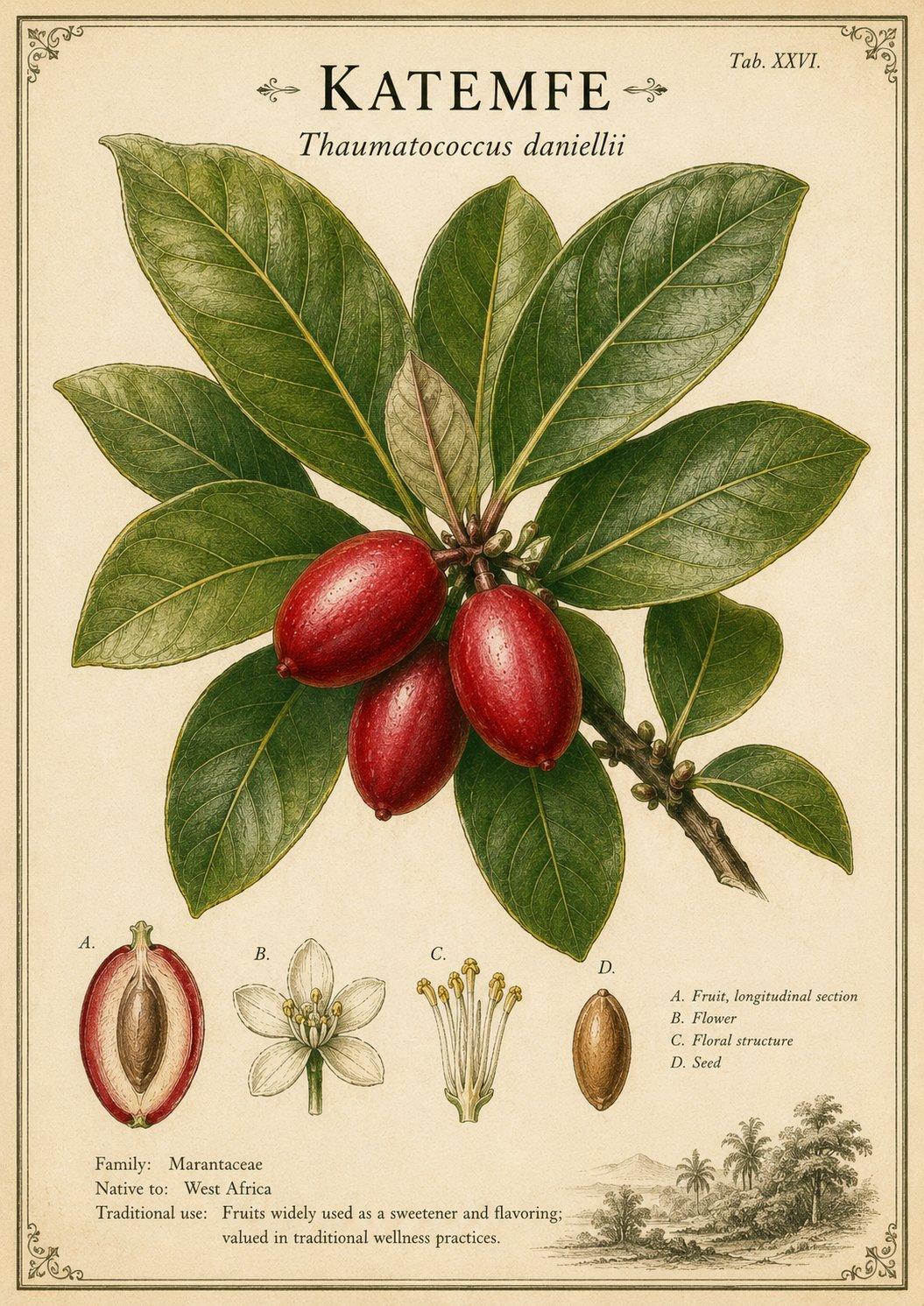
Thaumatococcus daniellii — known locally as the katemfe plant — is a large-leafed herbaceous perennial that grows in the dense tropical rainforests of West Africa, from Sierra Leone in the west to the Democratic Republic of Congo in the east. It thrives in the humid, shaded understory of equatorial forest, reaching heights of 3 to 5 meters.
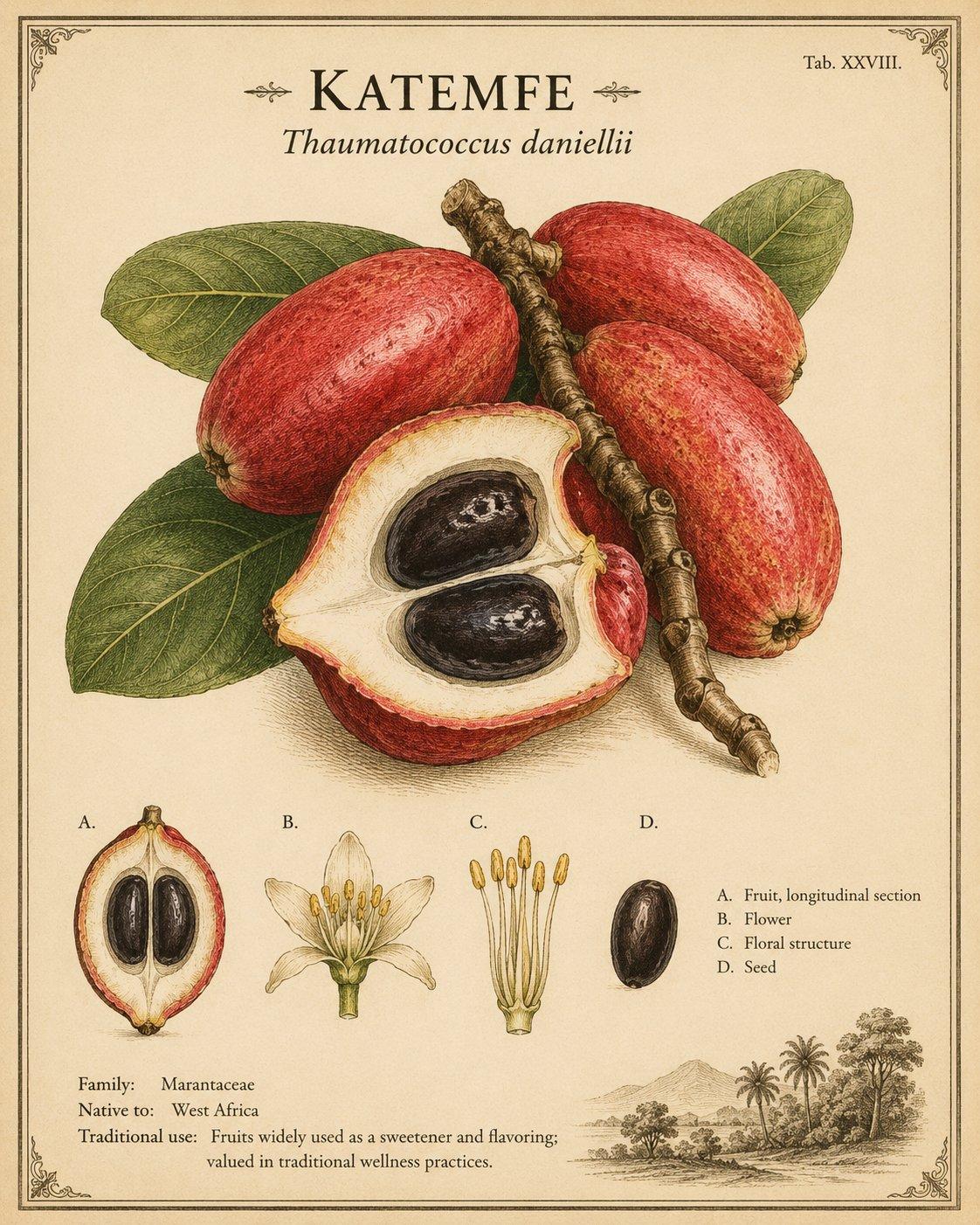
The plant produces distinctive purple flowers and triangular fruit. The fruit is covered in a soft, translucent reddish aril — the jelly-like flesh that surrounds the seeds. It is this aril that contains thaumatin, the extraordinary sweetening protein that makes the katemfe plant unique among all species on earth.
Local West African populations have long harvested the leaves as food wrappers — the thaumatin in the leaf surface imparts a pleasant sweetness to anything wrapped in them — and chewed the fruit arils for their intensely sweet taste. The katemfe fruit was first formally described in the scientific literature by William Freeman Daniell, a British botanist and army surgeon, in 1839.
What makes thaumatin extraordinary is not merely how sweet it is — it is what it is. Thaumatin is a protein. A 207-amino acid polypeptide chain that folds into a specific three-dimensional structure and activates the sweet taste receptors on your tongue with extraordinary efficiency.
Because thaumatin is a protein, your body handles it exactly as it handles any other dietary protein: digestive enzymes break it into individual amino acids, which are absorbed and used for normal metabolic functions. There is no special metabolism required, no breakdown into chemical byproducts of concern, no accumulation in tissues. It is simply food — digested, absorbed, and gone.
The sweetness mechanism is structural: thaumatin's specific three-dimensional shape allows it to fit the TAS1R2/TAS1R3 sweet taste receptor with extraordinary affinity — binding approximately 100,000 times more efficiently than sucrose on a molar basis. This explains why such vanishingly small quantities produce such intense sweetness.
Thaumatin also has a well-documented flavor-modifying effect. It enhances and rounds the flavor profiles of other ingredients — which is why the commercial food industry uses it as a flavor enhancer and bitterness masker in everything from chewing gum to sports nutrition products to dairy alternatives.
Most consumers don't know it. But thaumatin — listed as E957 or simply "thaumatin" on ingredient labels — is quietly present in thousands of commercial food and beverage products worldwide. The global thaumatin market is valued between $50M and $100M+ and growing at 6–7.5% annually. Here is where it already lives:
North America leads global thaumatin consumption at over 36% of the world market — yet most American consumers have never heard of it by name. That is the gap Pure Plant Sweet™ was created to close.
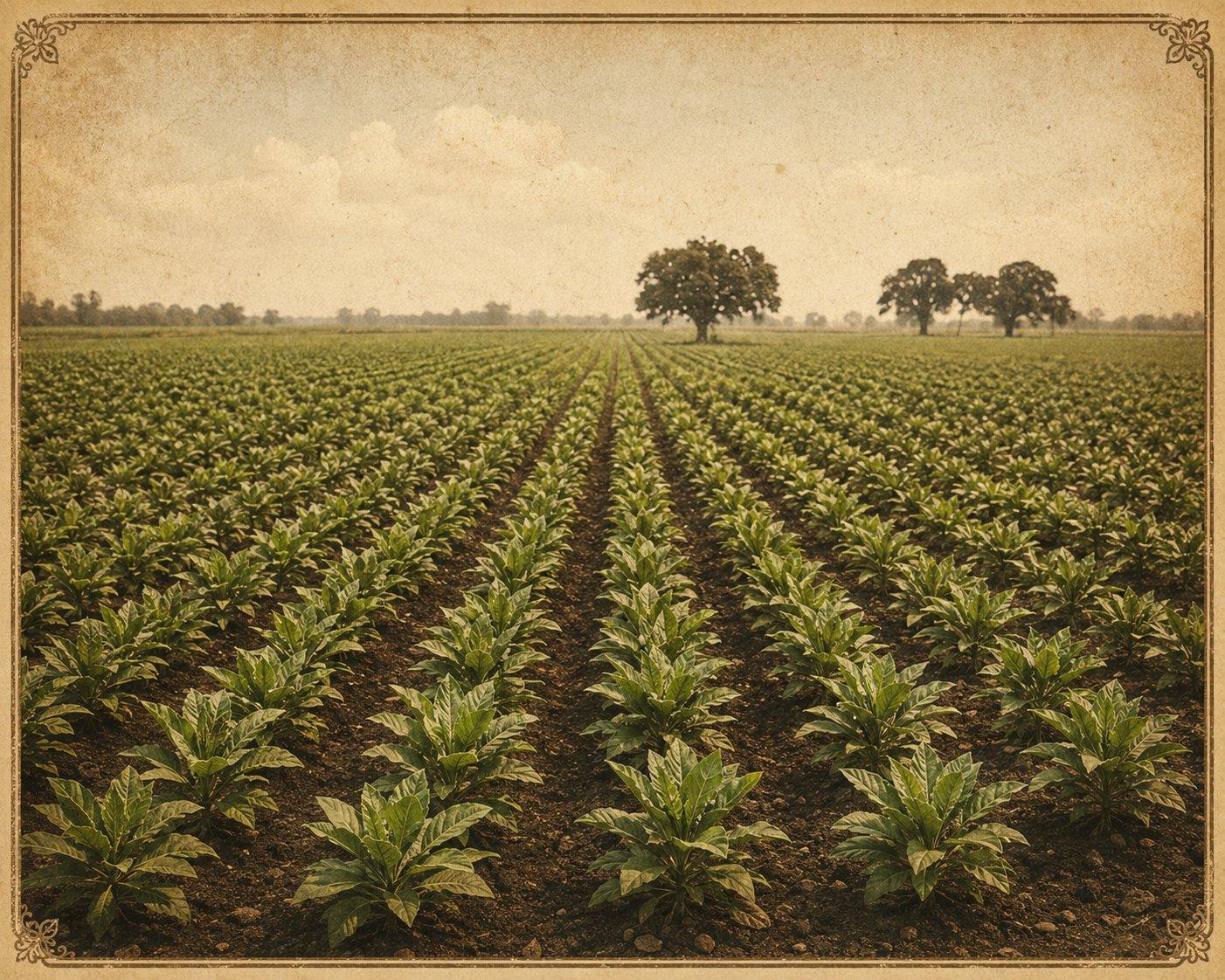
The thaumatin in Pure Plant Sweet™ begins as the sweet aril of the katemfe fruit, harvested from cultivated Thaumatococcus daniellii plants. The raw plant material is processed using aqueous extraction — the protein is water-soluble and can be isolated without harsh chemical solvents.
The resulting thaumatin powder undergoes rigorous quality testing. Our supplier's Certificates of Analysis confirm 99%+ purity by HPLC assay, pharmaceutical-grade microbiological standards (E. coli negative, yeast and mould within specification, total bacterial count within specification), and heavy metal levels well below regulatory thresholds.
The powder is then carefully dissolved in purified water with guar gum as a natural viscosity agent, potassium iodide for iodine content, and Vitamin C to maintain clarity and act as a natural antioxidant. The solution is filled into 30mL amber glass dropper bottles and sealed for shipping.
A note on precision fermentation: The thaumatin industry is actively developing precision fermentation methods — using engineered microorganisms to produce bio-identical thaumatin in laboratory settings. This approach promises greater supply consistency and lower cost as the technology matures.
Pure Plant Sweet™ currently uses plant-extracted thaumatin — the original, traditional source. We believe in transparency about sourcing, and we will update our customers as the supply landscape evolves. What will not change is our commitment to purity, safety, and the most rigorous quality standards.
Every batch is documented with a Certificate of Analysis. We are happy to provide this documentation to any customer who requests it.